Showing posts with label Pictures. Show all posts

Tuesday, September 25, 2018

Spirituality

There's no way to summarize California in just one picture, but this one covers a few aspects.

This picture was taken a couple of hours before sunset on August 5th at Manresa State Beach, a few miles south of Santa Cruz. There's a church holding baptisms in the ocean while surfers are enjoying waist-chest high sets and I just had to try to capture it. There would be many more surfers joining soon after the organized religious rituals were finished.

Friday, September 14, 2012

Recent updates

If I find articles that relate to older material here I’ll add an update to the original post. I’m not good about letting anyone know about the updates so I’ll take this opportunity to note a few from the past few months.

Parade’s End on BBC Two
Update (12 Sep 2012): Parade’s End, the BBC way by Thea Lenarduzzi in the Times Literary Supplement

The Katyn massacre
(posted on the summary post for Bloodlands: Europe between Hitler and Stalin
Update (10 Sep 2012): At the National Archives: Records Relating to the Katyn Forest Massacre

Forced relocation after World War II
Update (11 Aug 2012): Andrew Stuttaford's review in The Wall Street Journal of R.M. Douglas’ Orderly and Humane: The Expulsion of the Germans after the Second World War

BBC4’s radio adaptation of Ulysses
Updates: a review of the adaptation.
And another.
An article on why Ulysses is suited for radio.
Robin Brooks talks about the challenges adapting the novel to radio.

Satantango
Update (12 Sep 2012): László Krasznahorkai Reads from Satantango and discusses the novel with James Wood (courtesy Now That it's Now, the New Directions blog)

For the record, I made it through the first thirty minutes of the first DVD of Satantango. I couldn’t watch any more despite it being a faithful adaptation of the book.

The Stories of Bruno Schulz
Many thanks to zmkc for the pointing out the link to Nicole Krauss reading Bruno Schulz’s “Father’s Last Escape” (from a podcast at The New Yorker).

At the closed Giornale Nuovo, mr. h posted on Schulz, covering various aspects of his work with special emphasis on his artwork.

On the movie The Hour-Glass Sanatorium, Steve Mobia sent me a link to a trailer on YouTube that is much better quality than what I had watched. Short, but an excellent presentation of the weirdness of the movie as well as great quality... click here.

On the sesquicentennial of the Battle of Shiloh
Mental Floss had an article on the Angel's Glow that some soldiers experienced after the battle:
Some of the Shiloh soldiers sat in the mud for two rainy days and nights waiting for the medics to get around to them. As dusk fell the first night, some of them noticed something very strange: their wounds were glowing, casting a faint light into the darkness of the battlefield. Even stranger, when the troops were eventually moved to field hospitals, those whose wounds glowed had a better survival rate and had their wounds heal more quickly and cleanly than their unilluminated brothers-in-arms. The seemingly protective effect of the mysterious light earned it the nickname “Angel’s Glow.”

Pericles’ funeral oration
Update: Rhetoric as Ritual: The Semiotics of the Attic Funeral Oration

Travels with Herodotus
Update (2012 Aug 6): In the wake of Ryszard Kapuściński: A Life by Artur Domosławski (translated by Antonia Lloyd-Jones) there has been a lot written about Kapuściński's inaccuracies (to put it nicely) and his collaboration with the Communist intelligence agency in Poland. A good overview on the dust-up can be found in Neal Ascherson's essay on the book and Kapuściński's writing.

Update (2012 Aug 28): A review of Artur Domosławski's biography by Peter Englund at Financial Times

Carl's Premium Deer Processing, Loxley, Alabama
August 24, 2012
Text message: "Just to let you know I arrived OK"

Monday, August 20, 2012

Unplugged

I was unplugged for a few days--I highly recommend it. Sometimes it's fun just to have fun.

I'll be unplugged again this coming weekend (although with a much lower fun factor). Subjects for posts I have planned to write:
  • The Desert of the Tartars movie
  • Film, 20-minute feature by Samuel Beckett, starring (if that's the correct word) Buster Keaton
  • La Regenta by Leopoldo Alas. I've just finished the book and the good news is it's extraordinary. The bad news, for those wanting to read it, is the length, because you will want to finish it once you start. Expect several posts on this. I'll be watching the 1995 TV series, too.
  • Voyage to Kazohinia by Sándor Szathmári

That should easily take up the next two weeks or so...

Monday, August 06, 2012

I'm sorry I was a party to this

Title page to Clerks / Chasing Amy: Two Screenplays: by Kevin Smith

Robin,
See? Now this sucks. You get this cool gift, right. And that's okay. But now you know Dwight's going to hold it over your head forever. Maybe even extort sex from you as well (if he's not a relative...hell, maybe even if he is a relative).

I'm sorry I was a party to this.

[signature] Kevin Smith

Friday, July 27, 2012

A short break

I'll be taking a few days off as my wife and I celebrate our anniversary. Since we'll be in the area where we held the wedding, I'll add a link to my post on The Art of Eating Well.

Friday, July 20, 2012

How to Montaigne

I occasionally mention the audiobooks I listen to during my commute and this will be another such post. I'm listening to Sarah Bakewell's How to Live, or A life of Montaigne in one question and twenty attempts at an answer at the moment and wanted to add to the generally positive remarks I've seen on the book. From Bakewell's website:

How to Live is an unorthodox biography of this fascinating and charming man. It relates the story of his life by way of the questions he posed and the answers he explored, tracing his bizarre upbringing (made to speak only Latin), his youthful career and sexual adventures, his travels, and his friendships with the scholar and poet Etienne de La Boétie and with his adopted "daughter", Marie de Gournay. At the same time, it is the story of his many readers, who, over the centuries, have found in Montaigne an inexhaustible source of possible answers to the question that concerned them as it does all of us - "How to live?"

If you have some interest in the book but not enough time to read it at the moment, check out Bakewell's series of posts at The Guardian on Montaigne and his Essays titled "Montaigne, philosopher of life." This series provides a good outline for many topics in the book:

Part one: How to live
What is it to be a human being? Why do I behave as I do? Montaigne did not flinch from these essential questions

Part two: Learning not to be afraid
Montaigne had a terrible fear of death – until his own near-death experience showed him there was no need to worry

Part three: Believer and doubter
Montaigne's scepticism was of a very different breed to ours. For him, reason and evidence were as suspect as anything else

Part four: Borrowing the cat's point of view
Most of his fellows judged what was merely habitual to be what was natural. Montaigne tried to wake himself from this dream

Part five: Humanity, cruelty and fellow-feeling
Although he is both relativistic and sceptical, Montaigne manages to be every inch a moralist

Part six: The moment is everything
Montaigne's fascination with the flow of experience seems modern: like our own relentless self-documentation

Part seven: What can we learn from Montaigne?
Montaigne wanted to find solutions that would enable everyone both to survive and to remain fully human

Bakewell also has an episode on BBC Radio 3 about Montaigne. There's another episode currently available by A. C. Grayling.

It's nice to learn Montaigne's history. Given his political life in Bordeaux I now know what to drink while reading the essays. And given his family name, I'll have to save a bottle to celebrate finishing his work.

Friday, July 06, 2012

New addition

Meet Ginger, the newest addition to our family. It's hard to get her to stay still at the moment. The boys are excited and she's doing well in her new house. So far--she's been here less than a day.

She will probably appear on Cesar Millan's Dog Whisperer TV show later this year in a segment on adoptable, well-behaved dogs about to be put down at the Los Angeles pound and was part of his "pack" for a while. Many thanks to Second Chance at Love Humane Society in Templeton, California for making the placement with us so easy and matching us with the perfect dog for our family.

Tuesday, June 26, 2012

Well, that was different

Recovering from a fun weekend, not to mention a long day in the sun with over a hundred thousand of my closest friends. Credit goes to my wife for a great Father's Day present. Posting on Ferdydurke should continue tomorrow.

Tuesday, May 29, 2012

My Christmas present to you (Update)

2012 vintage

Update: if my posting in December seems more incoherent than usual, you'll know the reason.


Original post:
A Christmas present in May? That’s because you have to do the work now in order to enjoy this in December. It’s a nice touch after dinner with friends. Or when you have a quiet evening to enjoy a book. From Fancy Pantry by Helen Witty (New York: Workman Publishing Company, 1986):

A Cordial of Sweet Cherries

After the elements are assembled—the work of 10 minutes—time alone creates this pretty cordial. It requires several months in the jar before it’s ready to enjoy; put everything together in midsummer, and well before the winter holidays the fragrant spirits will be ready to sip.

When the cordial has been drained off and bottled, more sugar and brandy can be added ot the fruit, now awesomely wrinkled, for a second go-round, as described in the recipe.

2 pounds firm-ripe medium-size cherries, dark or light
2 to 4 cups sugar, depending on sweetness desired
1 quart good-quality brandy


1. Rinse and drain the cherries and roll them on a towel to remove as much moisture as possible. Remove the stems.
2. Divide the cherries between two sterilized, dry quart jars (or use a half-gallon glass storage jar with a gasket and a clamped lid, if you prefer),
3. Divide the sugar between the two jars, using 2 cups if you are unsure how sweet you want the cordial to be (more can be added later). Add the brandy, which should cover the cherries and sugar generously. Cover the jars airtight and set them in a cool, preferably dark spot where you will remember to check them regularly.
4. Shake the jars every few days or at least once a week; the sugar will gradually dissolve as the cherry juices join the brandy in the syrup. When all the sugar has dissolved, taste the syrup and decide whether you want to add more sugar; if you do, this is the moment. If sugar is added, continue to shake the jars occasionally until it has all dissolved.
5. Leave the cherries in the brandy for a minimum of 3 months; 5 or 6 months is not too long.
6. Strain the cordial from the cherries and funnel it into clean, dry bottles. Cap or cork them (use new corks only) and store them out of light.
7. If you want to recycle the cherries, add to them half as much sugar and brandy as you used the first time and proceed as before. You may want to leave the cherries in this batch until time to pour the cordial in order to extract all possible flavor.

My notes:
I prefer the results if you pit the cherries (obviously adds to the prep time) and let the jars sit for at least 5 months. My preference is to use 3 cups of sugar—sweeter is better with brandy. Don't go overboard on the quality (or price) of the brandy, but as with all recipes the quality of the ingredients is important for the final result. I use the half-gallon jar with a clamped lid for ease of use. Because I prefer to let the cherries sit longer in the cordial, I’ve had only mediocre results on re-using them. As with all recipes and differences in tastes, your mileage may vary. One last note—enjoy!

The picture below is from a couple of years ago—the strained cherries after sitting in the back of the pantry for 6 months.

Sunday, April 22, 2012

Sometimes I have nothing...

...especially when dealing with the loss of a co-worker and friend. I'm traveling again this week so I'll take a short break from posting.

Feel free to leave a caption for the youngest and a friend he made yesterday.

Wednesday, February 01, 2012

Childhood favorites


To commemorate HBO’s documentary Namath, I present my 4th grade class picture with me wearing his jersey. What the picture doesn’t reflect is that I was barefoot—the info board covers that detail. I refused to wear shoes to school until 5th grade (and I was lied to in order to get me to wear shoes at that point).

This was my third class picture wearing #12. My dad disliked Namath…or rather he disliked what he thought he represented. Starr…Unitas…those were his kind of QBs. Me, I liked Namath and Lamonica from this period (I was a huge football fan in my youth). Fortunately, other than passing comments on what he valued, my dad never put my choice of favorites down. Hopefully I’ll keep the same perspective with my kids.

View the pic and weep for the 60s and 70s. For my family--yes, you're allowed to laugh in front of me.

Too funny...I almost forgot I had posted something similar a year ago upon reading the article Who Lost Super Bowl III?.

Friday, December 30, 2011

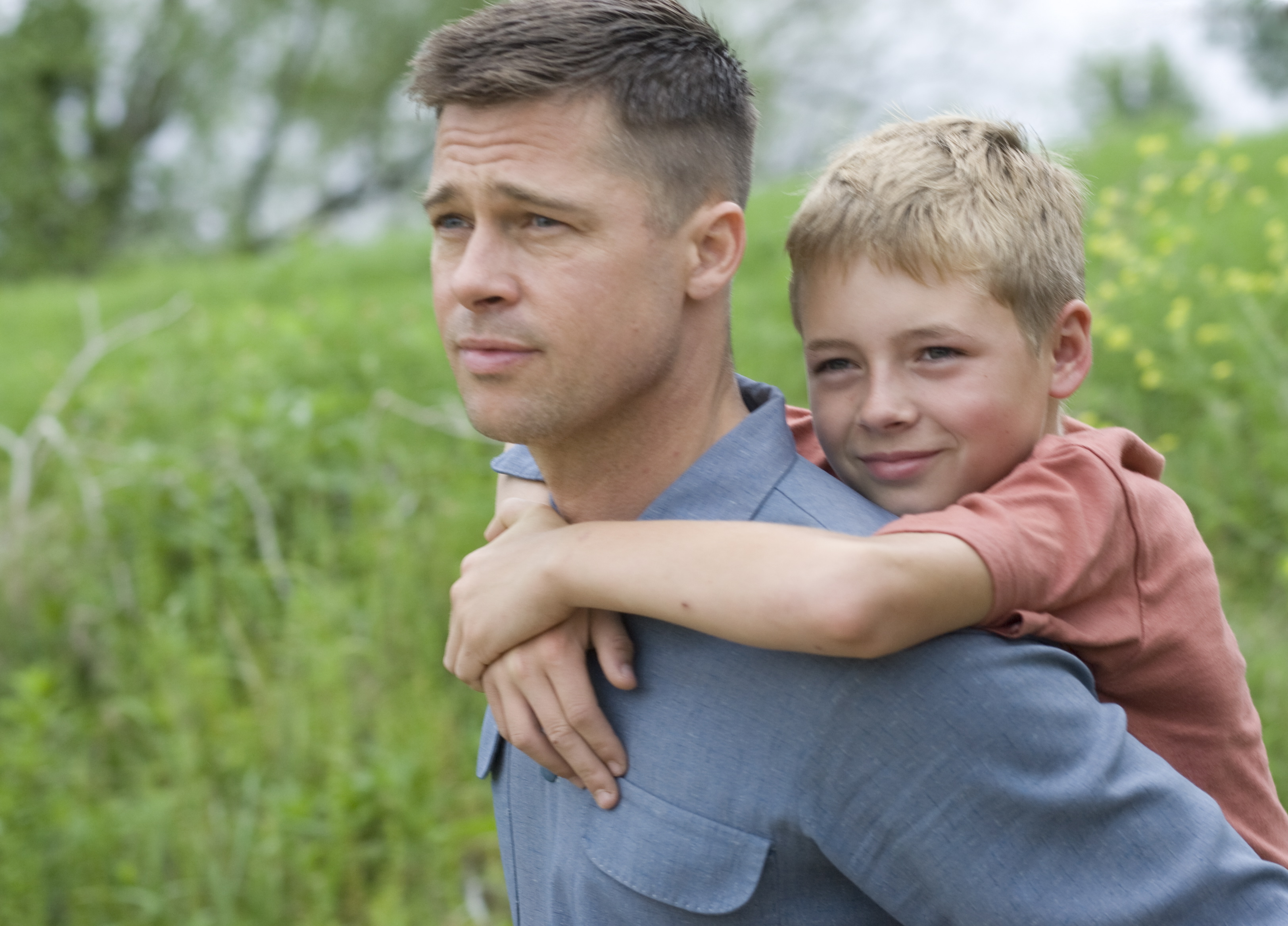
Outlining The Tree of Life

Picture source

A King At Night at biblioklept.org has done a terrific job piecing together the story within Terrence Malick’s The Tree of Life. Or maybe one of the stories within the movie. It’s funny to read the post and realize how slight a storyline can end up as such a powerful film. I also found it ironic that I had recently read Baroja’s The Tree of Knowledge, but that’s grist for another post.

The most disturbing part of the movie for me was how much I identified with Brad Pitt’s character. Don’t call Child Protection Services…not the abusive manner but some of the sources driving his behavior. The one thing from parenthood I least expected was how much you learn about yourself, both the good and the bad. Fortunately, as Malick’s film continually points out, grace and love are transcendent, mitigating factors for the rest of what we do.

I’ll continue to recommend the movie, even if I can’t always answer “What was it about?”

Wednesday, July 27, 2011

For a celebration that continues...

Some flowers for my wife, even if they are from nine years ago. Happy anniversary!

Sunday, June 19, 2011

A Grand Day Out

"Sightseeing is the art of disappointment."
Robert Louis Stevenson (incorrect in this instance) in The Silverado Squatters


Left side:
This tablet placed by
the Club Women of Napa
County marks the site
of the cabin occupied in
1880 by
Robert Louis Stevenson
and bride while he wrote
The Silverado Squatters.

Right side:
"Doomed to know not Winter
only Spring, a being trod
the flowery April
blithely for a while
took his fill of music,
joy of thought and seeing
came and stayed and went
nor ever ceased to smile."
RLS

See In Memoriam F.A.S. for the source of the quote.
Also see the California landmarks page for additional pictures.

On Saturday I headed to Napa Valley to explore some sights related to Robert Louis Stevenson. The first stop was the Robert Louis Stevenson State Park, the site where he lived as detailed in The Silverado Squatters. The Toll House used to be where the picnic area is located.

A perfect place for croquet, as Stevenson noted. A short hike takes you to the location of the office/bunkhouse that Steveson and his wife "squatted" in during the spring and summer of 1880. The rock wall where the structure stood still looks imposing.


Stevenson mentioned the wind quite a bit in his book, noting that the area below this ridge would escape the occasional gale. I noticed that the wind increased markedly as the day warmed up. The opening to the abandoned mine lies across a clearing and up a steep hill.


The scene of this little book is on a high mountain. There are, indeed, many higher; there are many of a nobler outline. It is no place of pilgrimage for the summary globe-trotter; but to one who lives upon its side, Mount Saint Helena soon becomes a centre of interest. It is the Mont Blanc of the California Coast Range, none of its near neighbours rising to one-half its altitude. It looks down on much green intricate country. ... Its naked peak stands nearly four thousand five hundred feet above the sea; its sides are fringed with forest; and the soil, where it is bare, glows warm with cinnabar.
...
And there was something satisfactory in the sight of that great mountain that enclosed us to the north: whether it stood, robed in sunshine, quaking to its topmost pinnacle with the heat and brightness of the day; or whether it set itself to weaving vapours, wisp after wisp growing, trembling, fleeting, and fading in the blue. ... She over-towered them [foothills] by two-thirds of her own stature. She excelled them by the boldness of her profile. Her great bald summit, clear of trees and pasture, a cairn of quartz and cinnabar, rejected kinship with the dark and shaggy wilderness of lesser hill-tops.

- (from the opening paragraph of The Silverado Squatters and the final paragraphs of Part I, Chapter 1)

I continued on the trail and hiked to the top of the north peak of Mt. Saint Helena, which provided spectacular views of Napa Valley and the surrounding area. The day had heated up quite a bit when I reached the top, so there is plenty of haze in this picture.


The change of view due to the heat is apparent when comparing the above picture and this one, taken 90 minutes earlier, from a couple of miles south and a thousand feet lower.


In The Silverado Squatters Stevenson describes a memorable scene of the valley covered by sea fog, the nearby lesser peaks looking like islands. It was, he said, "as though I had gone to bed the night before, safe in a nook of inland mountains, and had awakened in a bay upon the coast." For anyone that has seen such a roiling of fog in this area you can overlay that image on these peaks to the south.


More details on the hike can be found here. If you're in the area and want a short outing, I recommend the hike to the memorial and mine area. For anyone deciding to do the full hike, feel free to contact me for additional information that will help.

After the hike, I headed to St. Helena for a look at the Robert Louis Stevenson Silverado Museum. While not large, the museum has plenty of information on Stevenson's life and family, not restriced to his stay in the area. Many thanks to Dorothy Mackay-Collins for providing a wonderful tour of the exhibits. Thanks are also due to Ian Wolcott of The New Psalmanazar for clueing me in to the existence of the museum. For more information on Stevenson's time in California, see this page.

Afterwards there were other sights to see. Rumor has it Napa Valley has more to offer than just hiking and museums.


And perhaps the most curious feature of the whole matter is this: that we should have dwelt in this quiet corner of the mountains, with not a dozen neighbours, and yet struggled all the while, like desperate swimmers, in this sea of falsities and contradictions. Wherever a man is, there will be a lie.
- From The Silverado Squatters, after Stevenson helps in the jumping of a claim

Sunday, April 10, 2011

Monday, February 28, 2011

Blogging (and connectivity) to resume in a few days

Every time I take a book with me on a family trip I never get more than a page or two read and this trip is no exception. Not that I'm complaining, given the surroundings.

Tuesday, February 15, 2011

Kaputt: The Birds

Kaputt by Curzio Malaparte, translation by Cesare Foligno
(For a note on this book as a literary work instead of a memoir, see the earlier posts on Kaputt)
When night began to rise from the sea with its large bunches of violets already damp with nocturnal dew—at night the sea puts on its windowsills large bunches of violets that scent the air, filling the rooms with the pleasing breath of the sea—my friend said, “The night will be clear. They will certainly come. I must put the presents for the British flyers in the orchard.” I did not understand, and I was puzzled as I watched my friend enter the house and come out carrying a doll, a little wooden horse, a trumpet and two little bags of sweets which he, without saying a word and perhaps mischievously enjoying my bewilderment, went about carefully placing here and there among the rose bushes and lettuce clumps, on the pebbles of the narrow path and on the edge of a bowl in which a family of goldfish softly flashed.

“What are you doing?” I asked.

He gazed at me with a serious expression and smiled. He told me that his two children, who were already in bed, had been overcome with a terrific fear during the first bombings, that the health of the youngest one had been seriously affected—and that he had evolved a means of changing the fearful bombings of Naples into an entertainment for his children. As soon as the alarm hooted through the night, my friend and his wife jumped out of bed and, gathering the two little ones in their arms, began shouting merrily: “What fun! What fun! The British planes are coming to throw their presents to you!” They went down into their cellar that offered scant and ineffectual shelter and, huddling there, they passed the hours of terror and death laughing and shouting, “What fun!” until the boys fell happily asleep dreaming about the presents from the British flyers. From time to time, as the crash of the bombs and the crumbling of buildings came nearer, the little ones awoke, and the father said: “Now, now, they are throwing down your presents!” The two boys clapped their hands with joy, shouting: “I want a doll! I want a sword! Daddy, do you think that the British will bring me a little boat?” Toward dawn, when the hum of the motors moved off fading slowly into a sky that was already clear, the father and mother led the children by their hands into the garden, saying, “Look for them, look! They must have dropped them on the grass.” The two boys searched among the rose bushes, wet with dew, among the lettuce plants and the tomato stalks, and they found a doll here, a little wooden horse there and, farther off, a bag of candy. The two children were no longer afraid of bombings, instead they waited anxiously for them and welcomed them joyfully. Some mornings, searching through the grass, they found little sping-propelled airplanes—undoubtedly poor British airplanes that those nasty Germans had brought down with their guns while they bombarded Naples to make Neapolitan children happy.

Not a bad metaphor for Malaparte’s book, except he doesn't try to hide the underlying truth about the war. His intentions, aesthetically clear and morally open, tend to overwhelm his story at times. The anecdote of Ante Pavelic, the Croatian wartime Chief-of-State, and the basket with forty pounds of human eyes is told in this section. Over-the-top gothic fantasy? Of course, and totally unnecessary. Malaparte uses the story as a short-hand account of the changes he saw in Pavelic and the divergence between his rhetoric about goodness and justice and what was really happening.

Kaputt can seem like Samuel Chamberlain’s My Confession on steroids at times but Malaparte deliberately adds ambiguities and falsehoods, such as lying about the etymology of the word kaputt. Clearly he’s trying to get at a deeper truth by adding fiction to fact, but does it work? I’m not so sure it does…but then I’m not so sure it doesn’t. (How’s that for ambiguity?) It is a question I’ll need to think about as I read the last two sections.

Eyes play a central role in this section, focusing on the ability to see what is real. His anecdote on seeing German soldiers with no eyelids (they had been frozen off during the winter they spent on the eastern front) symbolically depicts what happens when you can't block out seeing the war: the future is lunacy. Malaparte recounts many stories in this section but the theme gradually focuses on the impact the war has on women, whether it’s the daughter of Mussolini, the wife of a German ambassador, or Jewish girls conscripted into military brothels. As long as hope survives for the ambassador’s wife or the prostitutes they endure, even though they descend “little by little into the dark and lonely feminine world of Germany at war”.


Tacky, I know, but I just strained these pitted cherries from the brandy and sugar they have been soaking in for the past six months and they reminded me of this section...